
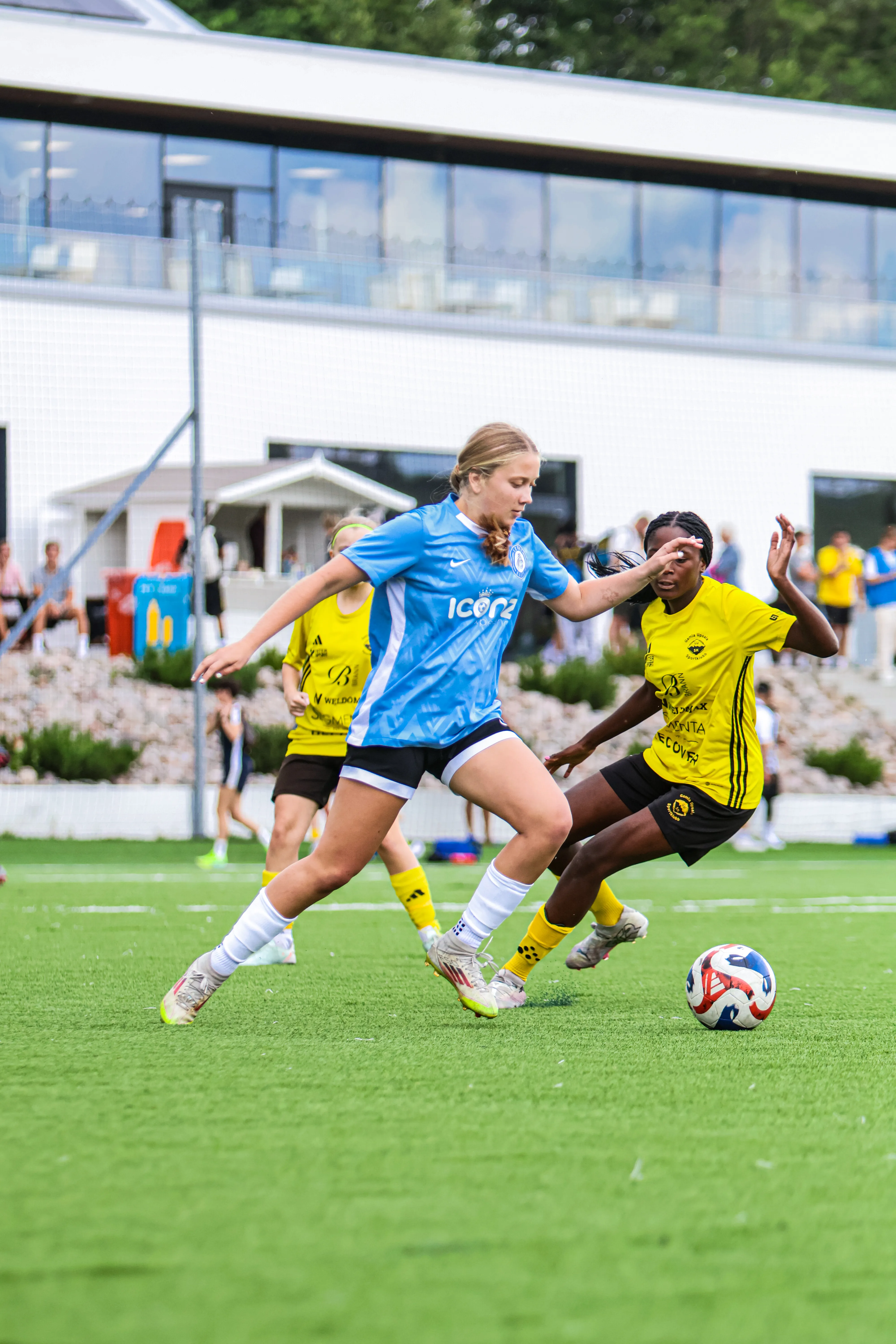
A player who is new to soccer does not need a complicated training plan. They need a ball, a little room, and a few activities that make the game feel possible. The best beginner drills create lots of comfortable touches, clear choices, and small moments of success. They should leave a young player wanting another turn, not worried about getting every detail right.
Start with comfort, not a long list of skills
Beginning soccer can feel busy. A young player sees teammates who can dribble, pass, shoot, and talk about positions, then assumes they need to master everything at once. They do not. The useful first goal is much simpler: help the player become comfortable moving with the ball and making one choice at a time.
A ball, two to four markers, and a safe patch of grass or open space are enough. Shoes, water bottles, or small cones can mark an area. Keep the first practice short, around 15 to 25 minutes. Stop while the player is still engaged. Repeating a small, successful routine is more valuable than stretching one session until focus disappears.
U.S. Soccer’s coach education resources are built around helping players learn through meaningful activity. At home, that means less standing in line and fewer lectures. Give the player a ball early, demonstrate one idea, then let them try it in a game-like way.
1. Ball familiarization: toe taps and sole rolls
Put the ball in front of the player. For toe taps, gently place one sole on top of the ball, then switch feet. Keep the ball nearly still. For sole rolls, put one foot on the ball, roll it across the body, and receive it with the other sole. Begin slowly enough that the player can stay balanced.
These are not tricks. They are a low-pressure way to learn where the ball is without looking down every second. Try four rounds of 20 seconds with a short rest. A parent can make it playful by counting clean touches, then asking the player to beat only their own previous total. There is no need to compare scores with anyone else.
If the ball keeps getting away, make the task easier. Use smaller movements, slow the rhythm, or work on grass rather than a hard, fast surface. The ball mastery guide offers a longer progression once these first touches feel familiar.
2. Traffic light dribbling
Mark a small rectangle, roughly eight to ten big steps long. The player carries the ball inside it using gentle inside-foot touches. Call “green” to move, “yellow” to slow down, and “red” to stop the ball with a foot on top. For a child practicing alone, they can say the colors aloud or use a timer that changes the instruction every few seconds.
This drill teaches more than dribbling. The player learns that they can change speed without kicking the ball far away, stop it under control, and begin again without panic. Keep the ball within one or two steps. If the space feels crowded or the ball travels too far, make the rectangle larger and slow the pace.
After a few rounds, add a simple direction call. Say “left” or “right” when the player reaches the far end. They turn toward that side and return. A beginner does not need a flashy move. A calm turn and a useful next touch are a genuine win.
3. Cone gates: look, choose, and carry
Make two small gates with markers, one on the left and one on the right. Start the player several steps away with the ball. Call a gate color, number, or side just before they begin. The player looks up, dribbles through that gate, turns, and returns to the middle.
The point is not speed. It is lifting the eyes long enough to notice a choice, then keeping the ball close while moving toward it. That connection between a touch and a decision is what makes a simple drill feel more like soccer. Give the player plenty of time at first, then call the gate later only when they are ready.
For two players, let one be the caller and one be the dribbler. Switch roles often. The caller stays involved, and the dribbler learns that looking up is part of controlling the ball. When the activity becomes easy, move the gates a little farther apart rather than adding a complicated rule.
4. Pass through a gate
Place two markers about two steps apart to make a passing gate. Stand five to eight yards away with a partner. The player uses the inside of the foot to pass the ball through the gate, then receives the return pass and tries again. Begin with the ball still, then let the player take one settling touch before each pass.
A good beginner cue is “plant, point, pass.” The non-kicking foot plants beside the ball, the toes point toward the target, and the inside of the foot sends the ball along the ground. That is enough instruction. Too many details can make a player stiff, so focus on a smooth pass that reaches the partner rather than a perfect pose.
If there is no partner, use a wall in a safe area. A wall gives immediate feedback, but keep the distance close enough that the return ball is manageable. The passing guide is a useful next step when a player is ready to add movement, scanning, and more demanding targets.
5. Receive, turn, and find space
Set a gate a few steps to either side of the player. A partner passes along the ground. The player receives the ball, takes a first touch toward an open gate, and dribbles through it. Start by telling the player which gate to use before the pass. Later, point to one gate as the ball is traveling, so the player begins to notice information before the first touch.
This is an early version of a real soccer problem: the ball arrives, and the player has to decide what comes next. Beginners do not need to turn sharply or use the weaker foot immediately. First, help them understand that receiving the ball can create a new direction instead of simply stopping it.
Use a larger gate and slower passes for younger players. As control improves, narrow the gate or ask for a look over the shoulder before the pass arrives. The first-touch guide explains how that next action gradually becomes more intentional.
6. Finish with a small game
End with a game so the player can use the skills without thinking about a drill label. With two people, mark a small goal using cones and play one-minute rounds of 1v1. The attacker tries to dribble through the goal. The defender begins with gentle pressure and gives the attacker room to succeed.
For a small group, play 2v2 or 3v3 in a compact area with small goals. Keep the teams small so every player gets frequent touches and choices. Avoid long lines, elimination games, or rules that leave one player watching. The best beginner game is active, forgiving, and easy to restart after the ball goes out.
Celebrate useful actions, not just goals. A player who turns away from pressure, calls for a pass, or keeps trying after a missed touch is learning something important. The FIFA Training Centre is a helpful reminder that practice becomes more valuable when technical actions are connected to real game problems.
Make the drill fit the player
Age, confidence, and prior experience matter more than the drill name. A five-year-old may need shorter activities, a bigger area, and permission to pick the ball up between turns. An older beginner may enjoy a little more challenge, such as using both feet or making a decision from a later call. Neither approach is more serious. Both are ways to make practice achievable.
Change one thing at a time. Make the space smaller, add a second gate, shorten the time, or introduce a gentle defender. If several things become harder at once, the player may stop learning and start chasing the ball. The aim is a challenge they can solve with attention and repetition.
Keep an eye on how the player feels. Extra practice should complement school, club training, games, and ordinary family life. The training-load guide and hydration guide can help families protect recovery, especially during busy Florida weeks.
A simple 20-minute beginner session
Minutes 1 to 3: toe taps and sole rolls. Let the player settle in and get a feel for the ball.
Minutes 4 to 7: traffic light dribbling. Use a small space and give simple move, slow, and stop calls.
Minutes 8 to 11: cone gates. Ask the player to look up, choose a gate, and carry the ball through it.
Minutes 12 to 15: passing through a gate. Work with a partner or a wall, keeping each pass on the ground.
Minutes 16 to 20: finish with a small game. Use a cone goal, let the player try ideas, and end on a positive note.
This plan is not a test. If one activity makes the player smile and stay engaged, spend a little longer there. If an activity frustrates them, make it easier or return to it another day. The habit of enjoying practice is worth protecting from the very beginning.
How Iconz supports a confident start
A beginner grows faster when the environment gives them clear coaching, meaningful touches, and the confidence to make mistakes. Iconz gives young players additional opportunities to train, compete, and learn alongside the clubs they already represent. The goal is not to rush a player through the basics. It is to help them build habits that make the next challenge feel possible.
Families can explore the player development program, review the Florida locations, or register interest when they are ready to discuss a purposeful next step.
Frequently asked questions.
What soccer drills should beginners start with?
Beginners should start with simple ball touches, close dribbling, passing through a target, receiving the ball, and a small game. These activities help a player become comfortable with the ball before asking them to handle faster or more complex situations.
How often should a beginner practice soccer?
Two or three short, enjoyable sessions can be a useful starting point when they fit around the player’s team practices, games, school, sleep, and recovery. A player does not need a long session every day. Consistency and confidence matter more than adding tired repetitions.
Can a child practice beginner soccer drills at home?
Yes. A ball, a safe open area, and a few markers are enough for toe taps, sole rolls, close dribbling, cone gates, and passing with a partner or a safe wall. Keep the task simple, supervise where appropriate, and stop when the player is no longer moving with control.
Should beginners use both feet right away?
Yes, but gently. Invite the player to alternate feet and celebrate attempts with the less comfortable side. There is no need to force equal quality on the first day. Frequent, low-pressure practice gradually gives a young player more options to dribble, pass, and receive.
Published guidance.
Related posts.
Player Development
Soccer Ball Mastery Drills for Youth Players
A simple, progressive ball-mastery routine that helps young players build closer control, better balance, and confidence on the ball.
Read article →
Player Development
Soccer Warm-Up Drills for Youth
A simple, ball-friendly routine that helps young soccer players arrive ready to move, think, and play.
Read article →