
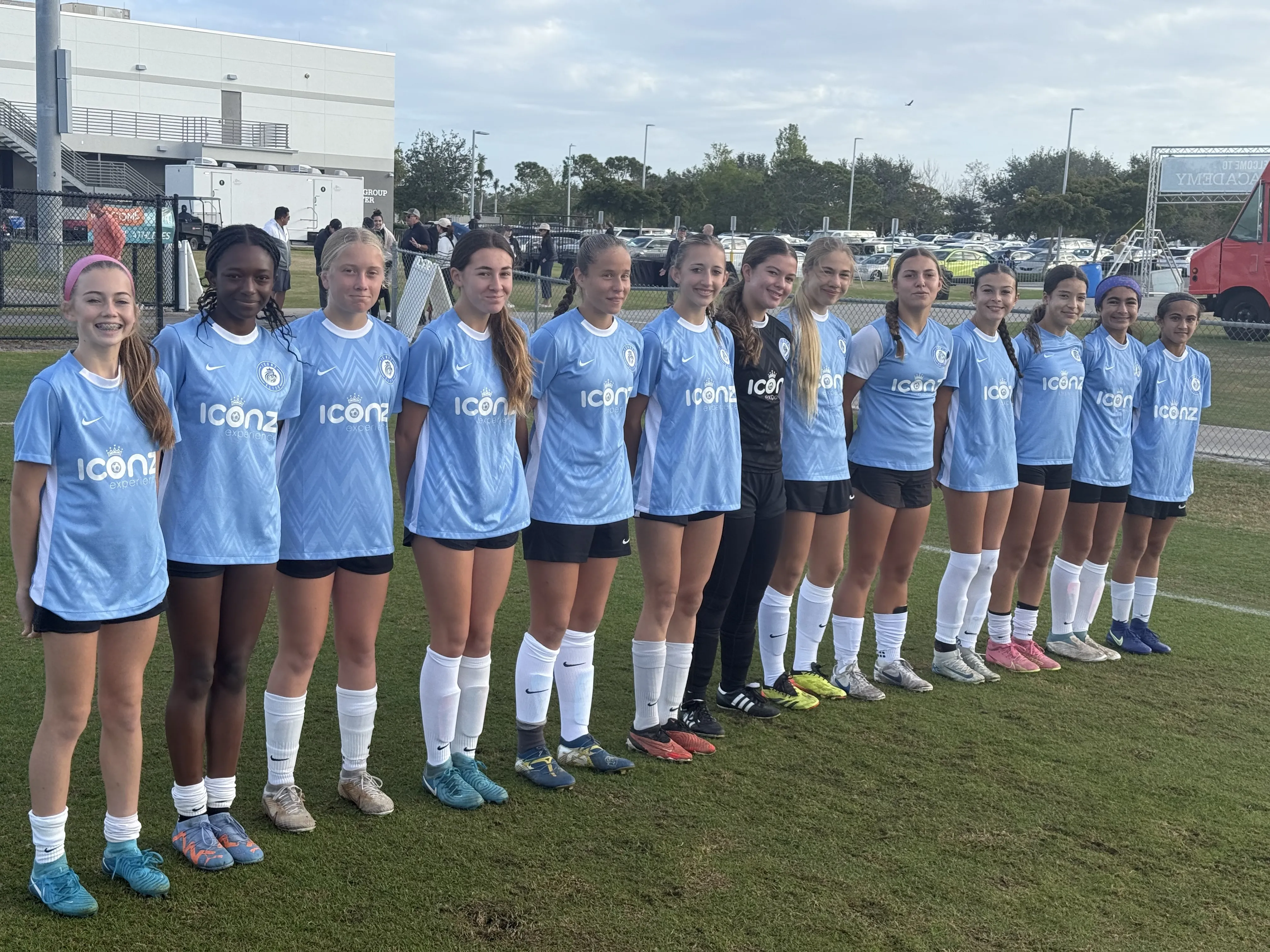
Youth soccer positions can seem more permanent than they are. A player enjoys scoring, gets called a striker, and suddenly every game becomes a test of whether they can stay there. Another player is fast or tall, gets placed in defense, and starts to believe that is the only part of the field they are allowed to understand. The better starting point is simpler: a position is a place to learn a set of game problems. Young players need time in roles, but they also need a broad picture of the game.
Start with the age and the game format
Positions grow as the game grows. A young player in a small-sided game is not doing the same job as an older player in an 11v11 match. The field is smaller, there are fewer teammates, and the ball changes hands quickly. That is why labels such as defender, midfielder, and forward should help a child understand space, not lock them into an adult version of the game too early.
U.S. Soccer's age-group guidance begins with no set positions for its youngest players and encourages every player to experience goalkeeping when it is used. Its game-format guidance then builds from 4v4 through 7v7 and 9v9 to 11v11, with each format adding new relationships between height, width, depth, teammates, and opponents. The lesson for families is not that every team must use the same formation. It is that a role should match what a player is ready to learn now.
At younger ages, the most useful questions are usually: Can the player find space? Can they recognize which goal they are defending? Can they help when the ball is lost? Can they move after making a pass? Those habits travel with a player into every future role. A child who understands them will have more choices when positions become more detailed later on.
What each area of the field teaches
The easiest way to explain youth soccer positions is by area of the field. Players behind the ball learn how to protect space, receive under pressure, and begin an attack. Players around the middle learn how to connect teammates, notice options in more than one direction, and react when possession changes. Players closest to goal learn how to make runs, create space, finish chances, and begin the defensive work from the front.
A goalkeeper has a different view of all of it. In addition to handling and stopping shots, a young goalkeeper learns communication, starting position, bravery, and how to support teammates with the ball. That is one reason a short goalkeeper experience can be useful for many children. It helps them see why a defender must show for the ball and why a pass back to goal can be a calm, smart choice rather than a failure.
These are learning areas, not rankings. Midfield is not automatically the important position. Forward is not the reward for a player who scores. Defense is not where a player should be hidden. Every role asks a player to solve different versions of the same game: where is the space, where is the danger, and what helps the team next?

Give players enough time to learn a role
Rotation does not mean moving a child every few minutes with no explanation. A player needs enough time in a role to recognize patterns, make mistakes, and try again. If a player is asked to play wide, for example, they need more than one touch near the sideline before they can begin to understand when to stay open, when to come inside, and how to help after the ball is lost.
A helpful approach is to give the player a simple job for a block of games or training sessions. A young defender might focus on staying connected to a teammate and finding an open passing angle. A midfielder might focus on checking the space before receiving. A forward might focus on making one useful run after passing. These are small, observable challenges, and they give a child something more useful than the pressure to look like a finished player.
The FA's youth-coaching guidance makes the same practical point: young players benefit from learning a variety of positions, while a role needs enough time for confidence and understanding to grow. Parents can support that balance by treating an unfamiliar position as an experiment, not a verdict. A difficult first game often means the player has found a new problem worth learning.
Why playing different positions matters
A player who has spent time in several areas of the field sees more of the game. A forward who has defended understands why the first press matters. A defender who has played in midfield understands why a teammate may need an extra passing option. A wide player who has tried goalkeeping may become more aware of the passing lane they block. Those experiences build empathy, awareness, and better decisions.
They also protect young players from being chosen for a role only because of a temporary advantage. Children grow at different times. The fastest or tallest player at nine may look very different at fourteen. A player who dominates physically today still benefits from learning to receive, pass, scan, and solve problems in tight spaces. A player who is smaller today may become an excellent defender, midfielder, or striker as confidence and physical development change.
Variety does not erase a player's preferences. A child may genuinely enjoy being a goalkeeper, center back, or forward. That is valuable information. The aim is to let that preference grow alongside a wider education, so a player is choosing from experience rather than being limited by an early label.

How parents can talk about positions
The car ride home can shape how a child feels about a position. Instead of asking only whether they scored or won, try questions that help them describe the game. What was your job when your team had the ball? Where did you find space? What did you notice when the other team had it? What felt easier today than last time? These questions signal that learning counts in every part of the field.
Avoid using a position as a judgment. Saying a player was put in defense because they are not a scorer, or moved to the bench because they are not ready, can make a normal learning experience feel personal. Coaches make choices for many reasons: the game, the opponent, a rotation plan, attendance, balance, or a specific learning challenge. Parents do not need to agree with every decision to keep the conversation constructive.
If a player is disappointed, start there. It is fine to say that it can be frustrating to leave a favorite role. Then help them find one action they can own in the new one. A young winger may be asked to make one supporting run. A defender may be asked to open up before receiving. Giving the player a clear next action keeps the focus on growth rather than on a label they cannot control.
A simple way to support rotation
Families can keep rotation simple. A small note of which areas a player has tried over a few weeks is enough. There is no need to create a scouting report or track every minute. The point is simply to notice patterns: Has the player only played on one side? Have they ever been allowed to try goalkeeping? Do they understand both attacking and defending responsibilities? Is there a role they would like to explore again?
For coaches, clear communication reduces confusion. A short pregame explanation can help players and parents understand the plan: today we are giving several players a chance to work in a new area, and each player has one job to focus on. When rotation is intentional, it feels less like random change and more like part of a player's education.
For players, the best record is often a sentence after a game: “I played wide and learned to stay open when the ball was on the other side.” That kind of reflection teaches a child to see progress that does not appear in the scoreline. It also makes the next time in that role less intimidating.

When a position can become more focused
As players get older, train more regularly, and move toward larger-sided games, it makes sense for roles to become more detailed. A player may begin to spend more time in a position that fits their interests, strengths, and team needs. More focus can help them learn the timing, communication, and decision-making that a role demands at a higher level.
Even then, flexibility remains useful. Modern soccer asks players to adapt when the ball moves, when a teammate presses, and when a game changes. A fullback may need to build an attack. A winger may need to defend deep. A central midfielder may cover wide space. The player who understands only one static spot on a tactics board will find those transitions harder than the player who has learned the connected jobs around them.
A good conversation with a coach is specific and calm. Ask what the player is learning in their current role, which game moments would help them improve, and whether there are adjacent roles worth exploring. That creates room for useful feedback without turning every matchday decision into a debate about status.
How ICONZ Elite supports the whole player
ICONZ Elite gives young players purposeful environments to keep building their technical and game understanding alongside their existing clubs. Training, competitive experiences, and mentoring can give a player fresh problems to solve, whether that means receiving under pressure, recognizing space, supporting a teammate, or responding after the ball is lost.
For families, the most useful added opportunity is one that helps a player develop without crowding out the rest of their week. ICONZ's club-neutral approach lets players keep their established team connection while gaining another place to learn and test themselves. Families can explore the player development program, review Florida locations, or register interest when they are ready to discuss a next step.
Frequently asked questions.
What position should a young soccer player play?
A young player benefits most from a role that gives them a clear, age-appropriate game problem to learn. Over time, they should have chances to experience different areas of the field, especially while they are still building their overall understanding of soccer.
Should youth soccer players rotate positions?
Rotation can help young players understand teammates, space, attacking, and defending from more than one point of view. It works best when players have enough time in a role to learn from it, rather than being moved without a clear purpose.
When should a player specialize in one position?
Position focus usually becomes more useful as a player gets older, plays larger-sided games, and has enough experience to understand the responsibilities of several roles. Even then, keeping some flexibility helps players adapt to the changing demands of a match.
How can parents support a child who is unhappy with a position?
Start by recognizing the disappointment, then help the player identify one useful action they can try in the role. A calm conversation with the coach about what the player is learning can also provide clarity without making one matchday decision feel permanent.
Published guidance.
U.S. Soccer guide to game formats and formations
Related posts.
Player Development
Youth Soccer Defending Drills That Build Confidence
Seven practical defending games that help young players stay balanced, delay attackers, recover, and work together.
Read article →
Player Development
Soccer Drills for Beginners: A Simple Starting Plan
Six simple soccer drills that help young beginners build comfort with the ball, confidence, and better game habits.
Read article →